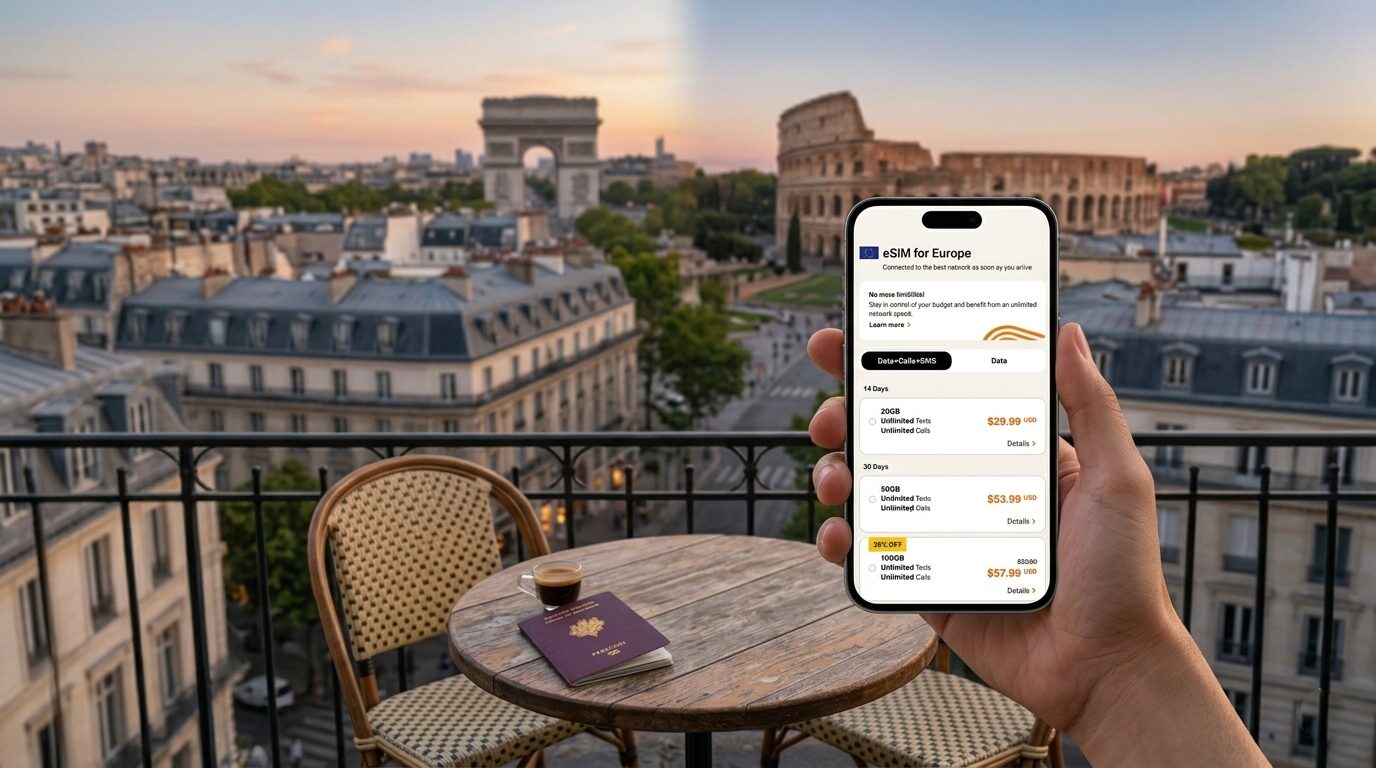
Author: administrator administrator

  • Why Budget-Friendly Mobile Data Options Are Gaining Popularity

    Best Cheap eSIM Plans for Budget-Friendly International Data

    For as little as a few dollars, cheap eSIM plans can slash your roaming costs by up to 90% compared to traditional international SIMs. These digital profiles download directly to your phone, allowing instant activation without a physical card swap or store visit. The core benefit is access to competitive local network rates globally, often in under five minutes. To use one, simply purchase a plan online, scan a QR code, and follow the on-screen setup prompts.

    Why Budget-Friendly Mobile Data Options Are Gaining Popularity

    Budget-friendly mobile data options are gaining popularity because cheap eSIM plans eliminate the financial friction of traditional roaming. Instead of paying carrier rates for a short trip, travelers instantly activate a local or regional data package at a fraction of the cost.

    The key insight is that you buy only what you need, often for under $10, cutting monthly commitments entirely.

    This on-demand pricing model removes overage fear and hardware costs—no plastic SIM to buy or lose. For frequent travelers or digital nomads, stacking multiple cheap eSIMs on one device lets them switch to the lowest rate per gigabyte in real time, keeping connectivity lean and expenses minimal.

    How Travelers Save Money Without Physical SIM Cards

    cheap esim plans

    Travelers slash roaming fees by instantly activating cheap eSIM plans on their existing devices, bypassing costly physical SIM purchases at airport kiosks. They compare local data packages from multiple global providers right from their phone, locking in regional or country-specific deals often 60% cheaper than standard roaming. Without swapping SIMs, they avoid losing connectivity or risking lost cards, while dual-SIM phones let them keep their home number active for calls. This eliminates hidden per-megabyte charges and the need for separate travel wallets entirely.

    Travelers save by comparing and activating cheap eSIM data plans instantly on their phone, avoiding physical SIM fees and expensive roaming charges.

    The Shift Toward Digital Connectivity on a Budget

    The shift toward digital connectivity on a budget is driven by users prioritizing essential functions over premium extras. Travelers and remote workers now choose affordable global roaming via cheap eSIM plans instead of costly postpaid contracts. This involves a clear sequence: first, users identify their primary needs like messaging or maps; second, they compare eSIM data-only packages; third, they activate a plan without physical SIM logistics. Low-cost eSIMs enable this shift by offering pay-as-you-go data, eliminating hidden fees and allowing budget-conscious control over connectivity. The result is reliable internet access for navigation and communication—without overspending on unused features.

    cheap esim plans

    Top Providers Offering Low-Cost International Data

    For budget-conscious travelers, Airalo provides hyper-localized regional packs often costing under $10 for 1GB, while Maya Mobile excels in South America with pay-as-you-go data starting at $2 per day. For a nuanced strategy, pairing a low-cost global data plan from Ubigi with a local eSIM for base connectivity can halve expenses on short trips. These providers offer direct activation without roaming markups, prioritizing transparent pricing over complicated bundles. Always verify device compatibility before purchasing, as some cheap plans restrict tethering or throttle speeds after a small data cap.

    Airalo: Regional and Global Pack Pricing Breakdown

    Airalo’s regional packs, covering continents like Asia or Europe, start as low as $5 for 1 GB over 7 days, ideal for multi-country trips. Their global packs, spanning over 100 countries, begin at $9 for 1 GB valid for 7 days, scaling up to 20 GB for $89 over 180 days. For regional and global pack pricing breakdown, the sweet spot is the $20 global 3 GB pack lasting 30 days, offering broad coverage without per-country overage costs. Prices vary by region, but average $3–$5 per GB, making them a solid budget choice compared to single-country plans.

    Airalo regional packs from $5 (1 GB/7 days); global packs from $9 (1 GB/7 days) to $89 (20 GB/180 days), averaging $3–$5 per GB.

    Holafly: Unlimited Data at Wallet-Friendly Rates

    For travelers seeking budget-friendly connectivity, Holafly’s unlimited data plans at wallet-friendly rates eliminate the worry of overage charges. Their eSIMs, available for over 160 destinations, provide a set amount of high-speed data per day (e.g., 500MB or 1GB) before throttling to slower but unlimited speeds—ensuring constant access for navigation and messaging without surprise fees. Activation is instant via QR code, and no physical SIM swap is required. This capped-to-unlimited structure keeps costs low while guaranteeing connectivity, making Holafly a practical choice for light to moderate daily data users.

    Ubigi: Competitive Short-Term Plans for Frequent Flyers

    Ubigi offers competitive short-term plans for frequent flyers seeking cheap eSIM options, with packages tailored for layovers or quick business trips. Their 1 GB, 7-day plan costs around $4.90, while a 3 GB, 15-day plan is priced near $12, providing clear cost control. Plans activate instantly upon purchase, covering 200+ destinations without roaming fees. Frequent flyers benefit from multi-country regional bundles, such as Europe or Asia-Pacific, that avoid separate activation for each stop. Data speeds remain capped at 4G LTE, sufficient for navigation and messaging. Users manage top-ups via the app, preventing lapses between flights.

    Ubigi’s short-term eSIM plans combine low per-GB pricing with regional coverage, making them a practical choice for frequent travelers needing flexible, pay-as-you-go data.

    Nomad eSIM: Flexible Data Bundles Under $10

    For budget travelers, Nomad eSIM’s flexible data bundles under $10 are a standout choice for cheap esim plans. You can grab a 1GB pack for just a few dollars, perfect for a weekend trip without wasting money. Need more? They let you top up easily if you run low mid-journey, avoiding expensive roaming. What’s the catch with Nomad eSIM’s low-cost data? Plans are data-only, so you’ll need WhatsApp or a messaging app for calls. Still, the price and flexibility make it a solid pick for light users.

    Comparing Value: What You Get for Under $20

    Under twenty dollars, a cheap eSIM plan often trades raw data volume for flexibility and longevity. You might get only 3GB of high-speed data, but that allowance spans a full 30 days—not a tourist trap’s 7. The real value emerges when you compare how far that data stretches: a week of maps, messaging, and ride-hailing in a city versus the same allocation burned in two days streaming video on a pricier short-term plan. Speed throttling after the cap is common, but some providers offer a trickle of usable 128kbps for bare-bones texts. For under $20, the best buys are eSIMs that include a local phone number for verification texts, sparing you from app lockouts abroad. Yet a plan’s true worth isn’t in gigabytes alone, but whether that small sum covers the exact week you need internet, not just roam.

    Data Allowances vs. Duration: Finding the Right Balance

    For plans under $20, the core trade-off is high data for a short period versus moderate data over weeks. A 7-day plan with 10GB might suit a heavy streaming trip, while a 30-day 3GB option better supports messaging and maps for a longer stay. Calculating your daily usage prevents waste; buying excess days you won’t use inflates cost per gigabyte. Conversely, a short duration with too little data forces refills, exceeding your budget. Prioritize duration-cost alignment by matching expiry to your trip length, then select a data amount slightly above your typical consumption.

    Balance is achieved by matching plan expiry to your travel length and data allowance to your daily needs, avoiding overpaying for unused time or data.

    Hidden Fees and Activation Costs to Watch For

    When comparing cheap eSIM plans under $20, watch for hidden activation costs that inflate the advertised price. Some providers charge a one-time setup fee, often $2–$5, applied only at checkout. Others levy service or “top-up” fees on the second billing cycle, masked as administrative charges. Always verify whether the plan price includes taxes and regulatory recovery fees, which can add 10–20% unexpectedly.

    • One-time activation fees not shown in the headline price
    • Mandatory “service” or “platform” fees added during checkout
    • Taxes and surcharges excluded from the plan amount
    • Automatic top-up penalties if your data runs out

    Speed and Coverage Differences Across Budget Plans

    Speed and coverage vary wildly across budget plans. A $5 plan might cap you at 512Kbps after a tiny data bucket, making social media scrolling slow. Meanwhile, a $15 plan often includes 5GB at 4G speeds on major networks like T-Mobile or AT&T, but coverage depends on the provider’s roaming agreements. Check the map first. For a clearer breakdown of what affects your experience:

    1. Check if the eSIM uses a primary network (better coverage) or an MVNO (cheaper, potentially slower).
    2. Look for “unthrottled” or “high-speed” in the plan details.
    3. Read recent user reviews for speed tests in your area.

    A plan Japan eSIM that promises 5G might deliver only 3G speeds during peak hours if it deprioritizes data.

    Best Tricks to Slash Your Mobile Data Costs Further

    cheap esim plans

    The best trick to slash mobile data costs further is to actively stack multiple cheap eSIM plans from different regional carriers. Instead of one global plan, buy smaller, country-specific eSIMs for high-cost destinations. For example, a 5GB European regional eSIM might cost $15, but a single-country eSIM for Italy could offer the same data for $5.

    Switch your primary eSIM off and toggle data to the local plan upon landing—this prevents roaming charges from your home carrier.

    Additionally, use a cheap eSIM that offers data-only without a phone number, as call plans inflate price. Pre-purchase bulk data packs during sales from providers like Airalo or Holafly, and never auto-renew; manually activate only what you need.

    Using Referral Codes and First-Time Buyer Discounts

    Unlock immediate savings by hunting for referral code discounts before purchasing any eSIM. Many providers reward existing users for sharing a unique code, which typically knocks $5–$10 off your first plan. Simultaneously, always select the “First-Time Buyer” offer, which often stacks with the referral bonus for a deeper cut. These dual discounts can slash your initial data cost by up to 30%, making a premium eSIM plan cheaper than local options out of the gate.

    Always combine a referral code with a first-time buyer discount to maximize your initial eSIM savings immediately.

    Layering Local eSIMs with Free Wi-Fi Hotspots

    Layering a local eSIM with free Wi-Fi hotspots creates a dual-pronged strategy to slash data costs. The local eSIM serves as your primary, low-cost cellular backbone, while you aggressively offload heavy tasks—like streaming or large updates—to trusted public Wi-Fi networks. This preserves your eSIM’s limited data allowance for essential mobile-only scenarios, such as navigation or messaging when Wi-Fi is unavailable. By consciously routing non-critical activity through hotspots, you effectively extend your eSIM’s value without sacrificing connectivity. This tactical pairing allows you to purchase a smaller, cheaper eSIM plan, trusting that free Wi-Fi coverage will handle the bulk of your daily usage. The result is a lean, cost-optimized mobile setup. Strategic eSIM and Wi-Fi pairing thus minimizes reliance on costly cellular data at every opportunity.

    Opting for Regional Packs Instead of Country-Specific Plans

    Choosing a regional eSIM pack over country-specific plans is a direct method to lower data costs when traveling through multiple nations. Instead of buying separate plans for each border crossing, a single regional bundle, like a European or Asian pack, typically covers several countries at a fraction of the per-gigabyte price. This strategy eliminates the premium charged for single-country roaming, which often includes localized fees. For multi-destination trips, the savings are immediate and tangible, as you pay one flat rate for broad coverage rather than stacking individual costs.

    Q: When should I choose a regional pack over a country-specific plan?
    A: If your itinerary spans two or more countries, a regional pack is almost always cheaper than buying separate plans for each nation.

    Regional Guidance for Thrifty Travelers

    Regional guidance for thrifty travelers using cheap eSIM plans focuses on matching a plan’s coverage zone with your exact itinerary. For multi-country trips, choose a regional eSIM covering all destinations, as multiple single-country plans often cost more. Check if the plan includes data roaming within specific regional blocs (e.g., EU, ASEAN, or the Gulf). Avoid global plans unless your trip spans multiple continents; regional options are usually cheaper and offer better local speeds. Prioritize plans that let you top up or extend validity within the same region without buying a new eSIM, saving time and money. Always confirm that the regional plan’s network partners match the countries you will visit to avoid dead zones. Stick to pre-paid, data-only regional eSIMs for maximum cost control.

    Affordable Connectivity in Europe Under €15

    cheap esim plans

    For thrifty travelers, affordable connectivity in Europe under €15 is achievable through regional eSIM data packs. Providers like Airalo, Holafly, and Maya Mobile offer plans ranging from 1GB to 5GB valid for 7–15 days, covering multiple EU countries without roaming fees. A 10€ eSIM often provides enough data for maps, messaging, and essential browsing without requiring a local SIM. Can I get reliable 4G/5G data across Europe for under €15? Yes, many eSIMs under €15 use major networks like Vodafone or Orange, ensuring stable speeds in cities and tourist zones, though rural coverage may vary. Always check plan specifics for tethering allowances and activation steps before purchase.

    Budget eSIM Options for Asia-Pacific Destinations

    For travelers to Asia-Pacific, budget eSIM options for Asia-Pacific destinations often include regional plans like the “Asia Pacific 15-day” from providers such as Airalo or Holafly, which bundle 5–10 GB of data for under $15. A clear sequence for picking the best deal is:

    1. Check if your destination is covered by a multicountry plan (e.g., covering Japan, Thailand, and South Korea).
    2. Compare local-only eSIMs (e.g., for Vietnam) versus regional ones—local is cheaper but less flexible.
    3. Look for promotional codes or first-purchase discounts on apps like Nomad eSIM.

    Use regional data packs to avoid per-country SIM hunting, ensuring seamless connectivity across borders without extra cost.

    North and South America: Prepaid Plans That Don’t Break the Bank

    For affordable connectivity across both continents, prioritize regional eSIM bundles covering North and South America. These packages often provide pooled data for the U.S., Canada, Mexico, Brazil, and Argentina at a fraction of per-country costs. A 30-day, 5GB regional prepaid eSIM typically costs under $30, with major carriers like AT&T or Claro on the networks. Always verify data-only support for your device; most plans exclude voice minutes. Avoid global roaming add-ons, which are pricier. Stick to prepaid data eSIMs that activate once you land, giving you instant local rates without physical SIM fees.

    cheap esim plans

    Regional eSIM prepaid plans across North and South America offer cheap, unified data—often under $30 for 5GB—bypassing expensive roaming while leveraging local carrier networks.

    Device Compatibility and Setup Without Hidden Costs

    For cheap eSIM plans, device compatibility is non-negotiable; only an unlocked, eSIM-capable phone from the last few years will work. Setup without hidden costs means the provider must offer a free, instant QR code or manual activation profile, with no “processing,” “delivery,” or “activation” fees. “How do I confirm no hidden fees during setup?” Always choose a plan where the displayed price is the final price, and the eSIM delivery method is included free—never opt for one that charges for a physical SIM or asks for payment before verifying your device’s IMEI, as that often precedes surprise charges. Reject any provider requiring a “compatibility check” that demands a deposit or upfront plan payment.

    Which Phones Support Multiple Digital Profiles

    For cheap eSIM plans, phones supporting multiple digital profiles let you store several cheap plans simultaneously and switch between them without added costs. Recent iPhones (XR and later, excluding SE) manage multiple profiles natively, while Samsung Galaxy S20 and newer models hold up to five. Google Pixel 4 and later devices also support this. To activate a new cheap eSIM without losing your existing one:

    1. Open your phone’s mobile network settings
    2. Select “Add eSIM” under the active line
    3. Scan the new cheap plan’s QR code
    4. Label profiles for easy switching

    This capability prevents needing additional hardware or hidden fees for plan swaps.

    Step-by-Step Activation for Non-Tech Savvy Users

    Once you buy a cheap eSIM plan, activation is usually just a few taps. First, check your inbox for a QR code or confirmation link—no paperwork needed. Open your phone’s settings, tap “Cellular” or “Mobile Data,” then “Add eSIM.” Scan the QR code or paste the code from your email. Follow the on-screen prompts to label the plan (like “Travel Data”), then set it as your data line. That’s it—you’re online without confusing jargon or hidden fees. Simple eSIM activation for beginners means zero guesswork, just a clear path from purchase to connection.

    Step-by-Step Activation for Non-Tech Savvy Users: locate your QR code, add eSIM in settings, scan, label, and go—no tech skills required.

    Troubleshooting Common Issues on Discounted Plans

    When troubleshooting common issues on discounted plans, connectivity failures often stem from an incomplete APN configuration for cheap eSIM plans. First, manually verify your network settings match the provider’s portal; automatic updates can fail on budget tiers. Next, toggle airplane mode for 30 seconds to force a fresh network registration—this resolves many activation timeouts. If data stalls, check your plan’s specific speed cap isn’t causing buffering; some discounts throttle video streaming by default until you adjust quality settings. For dual-SIM conflicts, temporarily disable your primary physical SIM. Finally, confirm your device’s firmware supports the exact frequency bands the plan uses.

    What Makes a Budget-Friendly eSIM Plan Worth Your Money

    Key Features That Define Affordable eSIM Options

    How Low-Cost Plans Maintain Reliable Connectivity

    How to Activate and Start Using an Inexpensive eSIM Right Now

    Step-by-Step Setup for First-Time Users

    Checking Device Compatibility Before Purchase

    Comparing Cost-Effective eSIM Plans Across Different Destinations

    Regional Options That Lower Your Roaming Bills

    Short-Term vs. Long-Term Affordable Data Packages

    Smart Tips to Get the Cheapest eSIM for Your Travel or Daily Use

    Avoiding Hidden Fees When Choosing a Low-Cost Plan

    Layering Local and Global Plans for Maximum Savings

    Common Questions About Budget-Friendly eSIM Service Answered

    Will a Cheap Plan Affect Data Speed or Coverage

    Can You Keep Your Number While Using a Low-Priced eSIM

    How to Manage Data Usage to Stay Within a Tight Budget

    Tools That Help Track Consumption in Real Time

    Adjusting Settings to Stretch Your Prepaid Allowance

  • Why Your Next Trip Needs a Digital SIM

    Unlock Global Roaming The Ultimate Travel eSIM Guide

    Tired of hunting for local SIM cards or facing shocking roaming bills when you land abroad? A travel eSIM is a digital SIM that lets you activate a cellular plan entirely online, bypassing physical cards and stores. You simply scan a QR code to connect to a local network, gaining instant and affordable mobile data in your destination. This setup allows you to keep your primary number active while using a separate data plan for maps and messaging.

    Why Your Next Trip Needs a Digital SIM

    A digital SIM eliminates the need to hunt for physical SIM cards or local providers upon arrival. You can purchase and activate a travel eSIM online before departure, ensuring instant connectivity as soon as you land. This means no queuing at airport kiosks or swapping fragile plastic cards. Why does your next trip need a digital SIM? Because it allows you to keep your primary number active while using local data rates abroad, avoiding roaming fees. Simply scan a QR code or download a profile—no physical logistics, no downtime. For short layovers or multi-country itineraries, it provides seamless, single-plan coverage without fiddling with hardware. It’s straightforward: one tap, connected instantly.

    Cutting the Cord: How Virtual SIMs Work

    travel esim

    Cutting the cord with a travel eSIM means replacing your physical SIM with a virtual profile embedded in your device. Instead of swapping plastic cards, you download a digital carrier profile over Wi-Fi, which connects to local networks via remote provisioning. Your phone’s eSIM chip stores this encrypted data, allowing you to activate a data plan before departure. When you land, the virtual SIM authenticates with partnered towers instantly, bypassing physical SIM slots entirely. This process lets you switch between local profiles without handling tiny cards, keeping your primary number separate while traveling.

    The Hidden Costs of Roaming vs. One Digital Plan

    Roaming might seem convenient, but hidden costs of roaming add up fast: daily fees, per-megabyte charges, and surprise taxes on every call home. One digital plan erases all that with a flat, upfront price. You avoid the billing shock of using maps or messaging abroad. Choose a digital SIM once, activate instantly, and stop worrying about hidden surcharges.

    1. Roaming triggers daily passes or pay-per-use rates for data you’d normally use without thinking.
    2. A digital SIM gives a single cost for all your data, calls, and texts across multiple countries.
    3. You eliminate opaque fees like roaming activation charges or back-home rounding-up rules.

    Comparing the Top Global Network Providers

    When comparing top global network providers for a travel eSIM, prioritize real-world coverage breadth over headline speeds. Aircalo’s global coverage excels for multi-country trips but uses local roaming, which can throttle data after 5GB per day on its top plans. Holafly offers unlimited data, yet its speed is capped at 30 Mbps, which fails for HD streaming. For reliable 5G performance, choose a provider like GigSky that connects directly to local Tier-1 operators—this ensures no deprioritization during congestion. To avoid surprises, check each provider’s specific allowed hours of high-speed data, not just the total volume. Tripactions or eSIM-like platforms often aggregate these, but direct provider apps give transparent usage controls. Always confirm your destination’s leading mobile operator—like TIM in Italy—and pick an eSIM that explicitly lists it as a partner network.

    Speed, Coverage, and Price: What Matters Most

    When picking a travel eSIM, you’re really juggling three things: speed, coverage, and price. For most trips, fast data in key zones matters more than blanket coverage—you don’t need 5G in a desert if you’re city-hopping. Coverage should focus on your actual destinations, not just “global” claims that slow down in rural spots. Price gets tricky because ultra-cheap plans often throttle speed after a few gigs. A balance means paying slightly more for reliable speed where you’ll actually use it.

    Speed keeps you online, coverage keeps you connected, and price keeps you sane—choose based on where you’re going, not what’s cheapest.

    Regional Specialists for Europe, Asia, and the Americas

    For travel eSIM users, regional specialists for Europe, Asia, and the Americas offer targeted coverage that often outperforms global plans within their zones. A specialist like Airalo’s regional Europe package provides seamless roaming across 40+ countries, ideal for multi-destination train travel. In Asia, a dedicated Asia eSIM from Sim Local ensures reliable LTE in Japan, Thailand, and Korea, bypassing inconsistent global roaming agreements. For the Americas, a single regional plan from Holafly covers both North and South America, avoiding the need to swap profiles between the US and Brazil.

    • Europe specialists often include unlimited data tiers for Schengen-wide travelers.
    • Asia specialists prioritize high-speed local carrier partnerships for dense urban areas.
    • Americas specialists consolidate coverage from Canada to Chile into one data pool.
    • These regional plans typically activate instantly without per-country registration fees.

    travel esim

    Step-by-Step Setup for First-Time Users

    You land in Tokyo, exhausted, and your phone has no signal. Before you panic, you already installed the eSIM at home. Step-by-Step Setup for First-Time Users starts with a QR code from your provider. You scan it in your phone’s cellular settings, add the data plan, and label it “Japan Travel.” When you arrive, you toggle this line on and your home line off—simple.

    The real trick is setting it up while connected to Wi-Fi, so the profile activates before you leave your living room.

    Once done, you power up in the airport, and within seconds your maps and messages work, no physical card needed.

    Checking Device Compatibility Before You Go

    Before purchasing a travel eSIM, verify your device’s eSIM compatibility to avoid connection issues abroad. Check if your phone is carrier-unlocked and supports eSIM profiles through your settings menu—typically under “Cellular” or “Mobile Data.” Older models or region-locked phones may not work, so confirm your specific model number on your manufacturer’s site. Also, ensure your device software is updated, as many carriers require the latest OS for eSIM activation. This five-minute check prevents activation failures upon arrival.

    Always confirm your device is unlocked, eSIM-ready, and updated before departure to guarantee instant connectivity with your travel eSIM.

    Purchasing, Activating, and Installing the Profile

    To begin, purchase the travel eSIM directly from a provider’s website or app, selecting a plan matching your destination and data needs. After checkout, you receive a QR code or manual activation code via email. Open your device settings, navigate to “Cellular” or “Mobile Data,” and tap “Add eSIM.” Scan the provided QR code or enter the details manually. The profile installs instantly; confirm by labeling it (e.g., “Travel Data“). Finally, toggle the line on and set it as your primary data source. Activation completes automatically once you connect to a local network at your destination.

    Troubleshooting Common Connection Glitches

    travel esim

    If your travel eSIM isn’t connecting, first ensure data roaming is enabled in your device settings, as this is the most frequent cause. Verify the eSIM profile is correctly installed and selected as your active data line. For network issues, manually search for and select a supported local carrier. Restarting your device often resolves temporary registration glitches.

    • Toggle Airplane Mode for 10 seconds to force a fresh network registration.
    • Confirm your APN settings match the provider’s instructions, particularly for manual configurations.
    • Double-check that the eSIM’s activation date aligns with your current travel timezone.

    Smart Data Management While Abroad

    Travel eSIMs make smart data management while abroad super simple. You can monitor usage from your phone’s settings, topping up data instantly if you run low instead of hunting for local SIMs. Many eSIM apps let you pause your data plan or set daily limits, preventing surprise overages. When you’re in weak signal areas, manually select a local network to optimize your connection. Turn off background app refresh for map apps and social media to stretch your eSIM data further. For longer trips, just switch to a cheaper secondary eSIM plan within the app without losing your primary number. This keeps your data use intentional and cost-effective, so smart data management while abroad feels seamless and stress-free.

    Tracking Usage to Avoid Unexpected Throttling

    To sidestep sudden slowdowns, actively monitor your real-time data consumption through your travel eSIM’s companion app. Most providers allow you to set hard usage alerts or automatic cutoffs at 80% of your plan. Even a single video stream can silently exhaust a 1GB daily allowance before you notice. Check your dashboard each morning and after heavy tasks like navigation. Preemptively top up by 500MB if you anticipate mapping or uploads later.

    Balancing Multiple Lines on One Handset

    Juggling your home SIM and a travel eSIM is seamless when you balance multiple lines on one handset. You keep your regular number active for two-factor authentication while using the travel eSIM for data abroad. Most phones let you label lines—like “Home” and “Travel”—then choose which one handles calls, texts, or internet. Forgetting to switch your default data to the travel eSIM can accidentally burn through pricey roaming charges. You can also set the home line to forward calls to an app or voicemail, avoiding missed important messages.

    That way, you stay reachable on your usual number while enjoying affordable local data, all without juggling physical SIMs.

    Unlocking Hidden Features in Your Digital Plan

    Unlocking hidden features in your travel eSIM plan often begins in your device’s cellular settings, not just the provider’s app. Navigate to your network selection https://baztel.co/esim-plans/esim-singapore to manually de-prioritize automatic roaming, forcing your phone to latch onto a stronger local tower for faster data. Many plans also hide APN configuration sliders that, when set to “default” rather than “automatic,” allow simultaneous use of your physical SIM for calls while the eSIM handles data. An overlooked toggle called “Data Roaming Off” can actually enable certain low-bandwidth connectivity that some operators restrict unless explicitly disabled. For seamless switching, save the eSIM’s QR code as a screenshot in your files, giving you instant re-installation access without contacting support if the profile gets corrupted mid-trip.

    Using Local Numbers for Rideshares and Deliveries

    When you grab a ride or order food abroad, linking a local number to your account is a game-changer. Your eSIM’s local digits let drivers or delivery riders actually call you without international costs or failed connections. No more playing charades with a confused driver at the pickup point. Simply enter your new travel eSIM number into Uber, Bolt, or Grab. For food apps like Deliveroo, it ensures the courier reaches you for gate codes or specific instructions. A local number smoothens every handoff, making your trip feel less foreign.

    • Receive real-time calls from drivers without roaming fees
    • Update your profile number in apps like Uber or DoorDash instantlyAvoid missed pickups due to non-local area codes
    • Use the same number for all your delivery service confirmations

    Leveraging Free Data for Messaging Apps

    When using a travel eSIM, leveraging free data for messaging apps allows you to stay in touch without consuming your paid plan allocation. Most travel eSIMs provide a small pool of complimentary data, which is best reserved for text-based services like WhatsApp, Telegram, or iMessage that use minimal bandwidth. By disabling image auto-downloads and video previews within these apps, you stretch this free data significantly. Always verify your eSIM’s specific “bonus data” terms, as some providers restrict this to a set number of megabytes. This approach keeps your core data untouched for navigation while ensuring family and friends can reach you without triggering costly overage charges.

    Security and Privacy on Public Networks

    You connect to a café’s free Wi-Fi in Florence, fingers hovering over a flight booking. With a travel eSIM, your data is encrypted through the provider’s VPN tunnel, shielding your card details from the nearby hacker sniffing the network. Your digital identity masks behind a remote server, so the café owner never sees your real IP. But that public hotspot still exposes your device’s MAC address—your eSIM can’t cloak every local broadcast. Always disable file sharing before tapping “Join”; otherwise, your phone may invite unwanted connections while you browse. The eSIM keeps your session private from the café, yet it depends on you to guard the device’s edges.

    Why Virtual SIMs Offer Better Encryption

    Virtual SIMs enhance encryption for travel eSIM users by eliminating physical SIM card exposure, which can be cloned or intercepted. Stronger end-to-end encryption protocols are inherent, as virtual profiles are provisioned securely over-the-air, bypassing local network vulnerabilities. This prevents rogue base stations from capturing your IMSI number during authentication. Without a removable chip, encryption keys reside solely in tamper-resistant device hardware, not transferable media.

    travel esim

    Q: Why do virtual SIMs offer better encryption than physical SIMs?
    A: Because virtual SIMs generate and store encryption keys within the phone’s secure enclave, never exposing them to physical extraction or local carrier interception.

    Protecting Sensitive Logins and Banking

    When using a travel eSIM, protecting sensitive logins and banking requires heightened caution, as public networks remain a primary attack vector. Always use a dedicated banking app rather than a browser for transactions, as apps often include built-in encryption. Enable two-factor authentication on all financial accounts before traveling, relying on an authenticator app instead of SMS, which is vulnerable on roaming networks. Avoid conducting banking on public Wi-Fi, even when using a VPN, as session hijacking risks persist. If you must access accounts, use the travel eSIM’s private mobile data instead of open hotspots.

    • Activate biometric locks on banking apps to prevent unauthorized access if your device is stolen.
    • Disable password autofill in browsers for banking sites while roaming.
    • Check ATM skimming alerts from your bank before withdrawing cash abroad.

    Eco-Friendly and Budget Travel Hacks

    Leaving for a month in Southeast Asia, I ditched the plastic-wrapped physical SIM and the roaming bill anxiety. Instead, I loaded a travel eSIM onto my phone before boarding, slashing my connectivity costs by over 80%. This digital card eliminated the need for a separate pocket device or a paper slip from a kiosk, directly cutting down single-use plastic waste. Navigating busy markets in Bangkok without hunting for wifi passwords felt seamless, and the real trick was turning off data-hungry apps for background refreshing to stretch my prepaid data to the very last day. Using local mapping offline rather than streaming maps became second nature, proving that budget-conscious travel and eco-friendly habits start with one simple, plastic-free upgrade.

    Reducing Plastic Waste from Physical SIMs

    Switching to a travel eSIM directly eliminates the plastic waste from physical SIM cards, each of which requires petroleum-based materials and manufacturing energy. Every traditional SIM you avoid using prevents the disposal of a non-biodegradable card and its packaging. Reducing plastic waste from physical SIMs is effortless when you download a digital profile instead of buying a new card. This simple choice keeps single-use plastics out of landfills and oceans during your trips.

    • One travel eSIM replaces multiple physical SIMs, cutting out dozens of plastic cards over years of travel.
    • No physical packaging means zero plastic from blister packs or cardboard with plastic windows.
    • You never need to discard an expired SIM, which would otherwise end up as microplastic waste.
    • Digital activation removes the carbon footprint tied to manufacturing and shipping the plastic card to a store.

    Top Off Before You Land: Pre-Travel Tips

    Before departure, prioritize pre-travel eSIM setup to activate your plan while still on Wi-Fi at home. This avoids hunting for connections at the airport after landing. Install the eSIM profile, verify network selection settings, and confirm your data plan’s start date. Testing the eSIM’s APN configuration while connected to home Wi-Fi ensures immediate functionality upon arrival, preventing costly last-minute roaming fees. Syncing offline maps and messaging apps before takeoff further maximizes your prepaid data from the first moment you switch off airplane mode.

    Top Off Before You Land: Pre-Travel Tips—activate and test your eSIM on home Wi-Fi to ensure seamless connectivity the instant you arrive, eliminating wasteful roaming and setup delays.

    Tailoring Your Plan to Trip Duration and Style

    For a weekend city break, a compact 1GB data pack suffices for maps and messaging, whereas a two-week road trip demands at least 5GB for streaming and social sharing. Your travel style dictates the plan: a digital nomad needs a generous 20GB monthly plan, while a minimalist hiker can thrive on a pay-as-you-go 500MB option. Q: Can I change my eSIM plan mid-trip if my itinerary shifts unexpectedly? A: Absolutely, most providers allow top-ups or plan switches instantly, so you can adapt from a thrifty 1GB city pack to a 10GB adventure plan without a new SIM card. Always match your data to your daily digital habits—a photographer uploading bulk images requires far more than a shopper checking emails.

    Short City Breaks vs. Multi-Country Adventures

    For a short city break, a single‑country or regional eSIM plan (e.g., 1‑3 GB for 3 days) often suffices, covering your intensive map‑ and transit‑app usage within one metro area. In contrast, multi‑country adventures demand a regional or global data package to avoid frequent re‑activation. A regional eSIM for Europe, Asia, or the Americas seamlessly switches between bordering nations, preventing connectivity gaps during train or bus crossings.

    Q: Should I prioritize data speed or coverage for a short break vs. a multi‑country trip?
    A: For a short city break, fast local 5G data is practical. For multi‑country trips, prioritize broad geographic coverage slightly over top speed, as networks vary per nation.

    Digital Nomad Packages for Extended Stays

    For extended stays, digital nomad eSIM packages unlock high-data caps and multi-month validity that standard tourist plans lack. These bundles typically offer 50–100GB or truly unlimited data, critical for video calls and cloud work, while preventing costly top-ups. A 30-day plan fails a three-month trip; compare a 90-day package’s cost-per-GB against purchasing three separate monthly plans—savings often exceed 40%. Prioritize packages with fast 5G speeds and rolling renewal options, avoiding throttled “unlimited” tiers. This guarantees consistent connectivity without coverage gaps when you cross borders, letting you maintain workflows seamlessly.

    Feature Standard Tourist Plan Nomad Package
    Max duration 30 days 90–365 days
    Typical data cap 5–20GB 50–100GB+
    Speed priority Slowed after cap Consistent 5G
    Auto-renew option Rare Always included

    What Exactly Is a Travel eSIM and Why Would You Need One?

    The Core Definition: Ditching the Plastic SIM for a Digital Profile

    Real-World Scenarios: Who Actually Benefits from Ditching Roaming?

    How Does It Work Under the Hood?

    Activation Without a Physical Card: The QR Code and App Setup

    travel esim

    Switching Between Local Networks Without Touching a Tray

    Managing Multiple Plans on One Device

    Key Benefits of Using a Digital SIM for Trips

    Eliminating Surprise Roaming Bills at the Border

    Keeping Your Home Number Active While Abroad

    Immediate Connectivity Upon Landing

    How to Choose the Right Plan for Your Destination

    Data-Only vs. Call-and-Text Plans: Which One Fits Your Needs?

    Regional Passes vs. Single-Country Packs

    Speed Tiers and Fair Usage Policies Explained

    Practical Tips for First-Time Users

    Installing Before You Leave to Avoid Airport Hiccups

    Troubleshooting Common Activation Hiccups

    What to Do If You Hit a Dead Zone

  • Die Zukunft des Wettens mit BillyBets Schweiz neu gestalten

    Die Zukunft des Wettens mit BillyBets Schweiz neu gestalten

    In der dynamischen Welt des Online-Glücksspiels ist die Wahl des richtigen Anbieters entscheidend. BillyBets Schweiz hat sich als vielversprechende Plattform etabliert, die sowohl erfahrenen Spielern als auch Neulingen eine Vielzahl von Wettmöglichkeiten bietet. Doch was macht dieses Casino einzigartig und worauf sollten Spieler achten, bevor sie sich registrieren?

    Ein frischer Wind im Online-Casino

    Die Benutzeroberfläche von BillyBets ist intuitiv und benutzerfreundlich gestaltet. Selbst wenn man neu in der Welt der Online-Wetten ist, findet man sich schnell zurecht. Die Vielfalt der angebotenen Spiele, von klassischen Casino-Spielen bis hin zu innovativen Live-Wettoptionen, zieht viele Nutzer an.

    Was man vor der Registrierung überprüfen sollte

    • Lizenzierung: Stellen Sie sicher, dass BillyBets über die erforderlichen Lizenzen verfügt, um in der Schweiz zu operieren.
    • Spielangebot: Überprüfen Sie die Vielfalt der Spiele und Wetten, die angeboten werden.
    • Einzahlungs- und Auszahlungsmethoden: Informieren Sie sich über die verfügbaren Zahlungsmethoden und die Bearbeitungszeiten für Abhebungen.
    • Kundenservice: Erkundigen Sie sich nach den Support-Optionen und deren Erreichbarkeit.
    • Bonusangebote: Achten Sie auf die Bedingungen für Willkommensboni und andere Promotions.

    Verantwortungsvolles Spielen fördern

    Bei BillyBets wird verantwortungsvolles Spielen ernst genommen. Die Plattform bietet verschiedene Tools, um Spielern zu helfen, die Kontrolle über ihr Spielverhalten zu behalten, einschließlich Einzahlungslimits und Spielpausen. Es ist wichtig, das eigene Spielverhalten regelmäßig zu reflektieren und gegebenenfalls Hilfe in Anspruch zu nehmen.

    Zahlungsmethoden und Verifizierung: Ein klarer Prozess

    BillyBets Schweiz bietet eine Reihe von sicheren Zahlungsmethoden, die den Bedürfnissen der Spieler gerecht werden. Zu den gängigen Optionen gehören Kreditkarten, E-Wallets und Banküberweisungen. Die Verifizierung des Kontos erfolgt in der Regel zügig, um ein sicheres Spielerlebnis zu gewährleisten. Spieler sollten jedoch darauf vorbereitet sein, ihre Identität und Adresse nachzuweisen, um den gesetzlichen Anforderungen zu entsprechen.

    Bonusangebote: Was steckt wirklich dahinter?

    Die Bonusangebote bei BillyBets können https://billybetsswitzerland.com verlockend erscheinen, jedoch ist es wichtig, die dazugehörigen Bedingungen genau zu lesen. Oft sind die Umsatzanforderungen hoch, und Boni können an bestimmte Spiele oder Zeiträume gebunden sein. Eine kritische Betrachtung dieser Angebote hilft, unrealistische Erwartungen zu vermeiden.

    Sicherheit und Datenschutz: Ein vertrauenswürdiger Anbieter

    Die Sicherheit der Spieler hat oberste Priorität. BillyBets verwendet moderne Verschlüsselungstechnologien, um persönliche und finanzielle Daten zu schützen. Spieler sollten stets darauf achten, dass ihre Daten sicher und vertraulich behandelt werden.

    Häufig gestellte Fragen zu BillyBets Schweiz

    Ist BillyBets in der Schweiz legal?

    Ja, BillyBets operiert mit einer gültigen Lizenz und erfüllt die gesetzlichen Anforderungen für Online-Glücksspiele in der Schweiz.

    Welche Spiele werden angeboten?

    BillyBets bietet eine breite Palette von Spielen, darunter Slots, Tischspiele und Live-Casino-Optionen.

    Wie lange dauern Auszahlungen?

    Die Auszahlungsgeschwindigkeiten können variieren. In der Regel dauert es zwischen 1 und 5 Werktagen, abhängig von der gewählten Zahlungsmethode.

    Gibt es einen Kundenservice?

    Ja, der Kundenservice von BillyBets ist rund um die Uhr verfügbar und kann per Chat, E-Mail oder Telefon kontaktiert werden.

    Eine differenzierte Sicht auf BillyBets Schweiz

    Abschließend lässt sich sagen, dass BillyBets Schweiz viele Stärken aufweist, die es zu einer attraktiven Wahl für Wettliebhaber machen. Dennoch ist es entscheidend, sich über alle Aspekte im Klaren zu sein, bevor man sich registriert. Ein Blick auf die Konditionen, das Spielverhalten und die eigene Verantwortung kann den Unterschied zwischen einem positiven und einem negativen Erlebnis ausmachen.

    Wie ein Experte für Online-Casinos einmal sagte: „Informierte Spieler sind die besten Spieler.“ Nehmen Sie sich die Zeit, um die Plattform gründlich zu erkunden, bevor Sie sich auf das Abenteuer einlassen.

  • Comment les Français gèrent sagement leur argent pour des vacances ultimes

    Les Français sont connus pour leur passion des vacances et leur capacité à les organiser avec soin. Mais comment font-ils pour financer ces escapades ? Pour certains, cela signifie économiser tout au long de l’année, tandis que d’autres préfèrent utiliser des stratégies de gestion financière pour faire face à leurs dépenses. Dans cet article, nous allons explorer les méthodes les plus courantes utilisées par les Français pour sauvegarder leurs économies et obtenir des vacances de rêve.

    Option 1 : L’épargne mensuelle

    La plupart des Français commencent par économiser une partie de leur salaire chaque mois. C’est une méthode simple et efficace qui permet de se créer un fonds de vacances progressivement. Pour réussir, il est essentiel de fixer un montant d’épargne mensuel et de suivre ses dépenses pour s’assurer qu’il n’y a pas de dérapage. Les Français qui suivent cette stratégie sont généralement plus enclins à économiser 10% à 20% de leur revenu mensuel.

    une femme économisant de l'argent
    Une femme de 35 ans, qui gagne 4 000 euros par mois, décide d’épargner 20% de son revenu mensuel, soit 800 euros. Elle les dépose dans un compte d’épargne spécifique et s’engage à ne pas les toucher avant l’arrivée de ses vacances. En un an, elle a économisé 9 600 euros, suffisants pour un voyage en Corse.

    Option 2 : L’utilisation de l’excédent de revenu

    D’autres Français préfèrent utiliser l’excédent de revenu généré par leur travail, par exemple, les revenus provenant de la vente de biens immobiliers ou de l’investissement boursier. Cette stratégie nécessite une certaine expertise financière et un plan d’investissement clair. Les Français qui utilisent cette méthode sont généralement plus enclins à investir dans des produits à haute rentabilité, tels que les actions ou les fonds communs de placement.

    un homme investissant dans l'argent
    Un homme de 40 ans, qui possède un appartement qu’il a vendu pour 200 000 euros, décide d’utiliser les 30 000 euros d’excédent de revenu pour financer ses vacances en Amérique du Sud. Après avoir investi les fonds dans des actions et des fonds communs de placement, il a obtenu un rendement de 15% et dispose désormais de 34 500 euros pour son voyage.

    Option 3 : L’utilisation de la location de logement

    Les vacances en location de logement sont de plus en plus populaires en France. Cette option permet aux Français de bénéficier d’une location pour une période de quelques jours ou semaines, plutôt que d’acheter un appartement entier. Les sites de réservation de locations, tels que https://monster-win-fr.fr, offrent une large gamme de propriétés à louer, pour satisfaire tous les budgets et les goûts.

    une famille en vacances en location
    La location de logement offre de nombreux avantages, notamment une économie d’argent par rapport à l’achat d’un appartement, la possibilité de choisir une location dans une région nouvelle ou de se déplacer facilement d’un endroit à un autre.

    Option 4 : L’utilisation de la réduction d’impôts

    D’autres Français utilisent les réductions d’impôts pour financer leurs vacances. Ces réductions, telles que le crédit d’impôt pour les frais de séjour, peuvent aider les Français à économiser de l’argent sur leurs dépenses de vacances. Les Français qui utilisent cette méthode sont généralement plus enclins à réduire leurs dépenses en fonction de leurs besoins et à les allouer à des activités de vacances qui sont éligibles à la réduction d’impôts.

    une femme bénéficiant d'une réduction d'impôts
    Une femme de 30 ans, qui gagne 3 000 euros par mois, utilise la réduction d’impôts pour financer ses vacances en Espagne. Elle bénéficie d’un crédit d’impôt de 500 euros sur ses frais de séjour et utilise l’argent pour payer un séjour de 7 jours dans un appartement en location, dans la région de la Costa Brava.

    Comment les Français gèrent sagement leur argent pour des vacances ultimes - aperçu

    Conclusion

    Les Français ont plusieurs options pour gérer sagement leur argent pour des vacances ultimes. La stratégie de gestion financière choisie dépend des préférences et des besoins individuels de chacun. Les options de l’épargne mensuelle, de l’utilisation de l’excédent de revenu, de la location de logement et de la réduction d’impôts sont toutes des moyens efficaces de sauvegarder ses économies et d’obtenir des vacances de rêve.

  • Gambling games for no deposit 200 free spins real Currency

    For individuals who love looking after your currency, check out the table regulations before you could set potato chips down. Certain claims allow you to gamble in the managed places, other people take off it totally, as well as the laws and regulations move usually. Modern slots-centered casino that have a totally free-spins-very first greeting render and you will a product framework based to quick access to your reception. (more…)

  • Kleine Details im Interface, die den Unterschied im Online Casino ausmachen

    Kleine Details im Interface: Wie sie das Erlebnis im Online Casino verbessern

    Warum das Interface mehr zählt als man denkt

    Wer schon einmal Stunden in einem online casino verbracht hat, weiß: Die kleinen Details machen oft den Unterschied. Es sind nicht immer nur die Spiele selbst, die Spieler anziehen, sondern auch, wie intuitiv und angenehm die Bedienung wirkt. Ein gut durchdachtes Interface schafft eine Atmosphäre, die zum Verweilen einlädt, während eine unübersichtliche Gestaltung schnell Frust verursacht.

    Für viele Nutzer ist die Navigation über das Menü und die Ladezeiten der Seiten entscheidend. Einige Anbieter setzen auf animierte Elemente, die jedoch nicht überladen wirken dürfen. Gerade im Vergleich zu klassischen Landcasinos zeigen sich hier klare Vorteile, wenn moderne Technologien und Designtrends sinnvoll kombiniert werden.

    Visuelle Klarheit und Benutzerführung

    Eine klare visuelle Struktur ist das A und O, um Spieler nicht zu überfordern. Elemente wie gut lesbare Schriftarten, ausreichend Kontrast und konsistente Farbschemata sorgen dafür, dass sich der Nutzer schnell zurechtfindet. Besonders in hektischen Momenten, etwa während eines Live-Dealer-Spiels von Evolution, ist es wichtig, dass alle Informationen übersichtlich und ohne Ablenkung dargestellt werden.

    Aus eigener Erfahrung kann ich sagen, dass ich oft das Gefühl habe, ein online casino ist erst dann wirklich gelungen, wenn die Buttons logisch angeordnet sind und wichtige Funktionen wie “Einzahlen” oder “Bonus aktivieren” direkt erreichbar sind. Das reduziert die Hemmschwelle und steigert die Freude am Spiel.

    Technische Feinheiten, die unbewusst wirken

    Hinter den Kulissen spielen Technologien wie SSL-Verschlüsselung oder optimierte Ladezeiten eine wichtige Rolle, auch wenn sie dem Spieler nicht direkt ins Auge fallen. Gerade bei mobilen Versionen ist es für Anbieter essentiell, dass das Interface auf verschiedenen Endgeräten flüssig funktioniert und keine Elemente verschoben oder abgeschnitten werden.

    Ein weiterer Aspekt ist die Integration unterschiedlicher Zahlungssysteme. Hier bevorzugen viele Spieler Anbieter, die Methoden wie Trustly oder BankID unterstützen. Das sorgt für schnelle und sichere Transaktionen, die wiederum das Nutzungserlebnis deutlich verbessern.

    Praxis-Tipps: Wie man typische Fehler im Interface vermeidet

    Oft wird unterschätzt, wie sehr kleine Fehler in der Gestaltung die Spielerfahrung trüben können. Dazu gehören unter anderem:

    1. Zu kleine Buttons, die auf Touchscreens schwer zu treffen sind.
    2. Unübersichtliche Menüstrukturen, die das Finden von Spielen erschweren.
    3. Zu viele Pop-ups oder aufdringliche Animationen, die ablenken.
    4. Fehlende oder schlecht sichtbare Hinweise zu Bonusbedingungen.
    5. Unzureichende Rückmeldung bei Aktionen wie dem Setzen eines Einsatzes.

    Ein gutes Interface vermeidet diese Stolpersteine konsequent. Anbieter, die sich auf populäre Titel von Pragmatic Play oder Play’n GO konzentrieren, profitieren oft davon, dass diese Spiele bereits mit klaren Designvorgaben kommen, die sich gut in das Gesamtkonzept einfügen lassen.

    Die Rolle der Psychologie im Design von Online Casinos

    Viele wissen nicht, dass die Farbwahl und das Layout auch auf psychologischen Studien basieren. Warmes Rot kann beispielsweise den Adrenalinspiegel erhöhen, während Blau beruhigend wirkt. Aus diesem Grund setzen einige Anbieter auf eine Kombination aus beidem, um Spieler emotional zu steuern, ohne aufdringlich zu wirken.

    Außerdem spielt die Erzeugung von Übersichtlichkeit eine wichtige Rolle für das Vertrauen der Nutzer. Wenn alles klar strukturiert ist, fühlt man sich sicherer – das gilt auch für die Darstellung von Limits oder Informationen zur Spielsuchtprävention. Gerade hier zeigt sich, wie verantwortungsbewusst moderne Plattformen agieren sollten.

    Was lohnt sich wirklich zu beachten?

    Für Spieler ist es wertvoll, genau hinzuschauen, wie ein online casino gestaltet ist, bevor sie sich langfristig binden. Kleine Details wie ein schneller Zugriff auf den Kundensupport oder die Möglichkeit, Spiele favorisieren zu können, wirken auf den ersten Blick unscheinbar, sind aber essenziell für den Spielspaß.

    Meiner Meinung nach ist es immer ein gutes Zeichen, wenn ein Anbieter regelmäßig Updates durchführt, um das Interface zu verbessern und auf Wünsche der Nutzer einzugehen. Denn die Welt der Online Casinos ist dynamisch, und wer hier bestehen will, muss sich ständig anpassen.

    Natürlich sollte man immer mit Bedacht spielen und sich der Risiken bewusst sein, die mit Glücksspielen verbunden sind. Ein gutes Interface unterstützt dabei auch die bewusste Kontrolle über das eigene Spielverhalten, etwa durch klare Limits und transparente Informationen.

    Zusammengefasst

    Die kleinen Details im Interface sind keine bloßen Spielereien, sondern tragen entscheidend zur Qualität eines Online Casinos bei. Sie beeinflussen die Nutzerfreundlichkeit, die Sicherheit und letztlich auch das Vergnügen beim Spielen. Wer sich auf etablierte Spiele wie Starburst oder Book of Dead freut, profitiert umso mehr von einem durchdachten Design und einer komfortablen Bedienung.

    In einer Branche, in der viele Angebote auf den ersten Blick ähnlich wirken, entscheidet oft die Liebe zum Detail, ob man gerne wiederkommt oder enttäuscht weiterzieht.

  • Test Post Created

    Test Post Created

  • Spieleauswahl: RTP und Spielautomaten im Fokus

    Immer mehr Spieler suchen gezielt nach Casinos, die transparente Rückschau auf ihre Spiele bieten. Besonders Stawki Bet casino präsentiert sich hier als verlässlicher Partner, der über ein breites Spektrum an Slots und Tischspielen verfügt. In diesem Leitfaden zeige ich, wie man die Spielauswahl im Stawki Bet casino bewertet – von den wichtigsten Rücklaufquoten bis hin zu den Angeboten der führenden Softwareanbieter.

    Viele nutzen die https://stawki-bet-ua.de/plattform für ihre ersten Tests, weil sie dort schnelle Ein- und Auszahlungen sowie zahlreiche Spielautomaten findet. Dabei bleibt das eigentliche Spielvergnügen immer im Vordergrund – genau das ist es, worum es in diesem Artikel geht.

    Casino gambling scene
    Spieler genießen das Hold’n’Go-Feeling im Stawki Bet casino.

    1. Die Bedeutung der RTP‑Rate bei Spielautomaten

    RTP (Return to Player) beschreibt den theoretischen prozentualen Auszahlungswert eines Spiels über lange Zeiträume. Für verantwortungsbewusste Spieler ist die RTP‑Rate ein zentraler Faktor bei der Entscheidung, welche Spielautomaten sie wählen. Stawki Bet casino listet bei jedem Spiel seine RTP an, sodass man direkt die sicherste Wahl treffen kann.

    Interpretieren von RTP‑Werten

    Ein RTP von über 95 % gilt als günstig. Spieler sollten darauf achten, dass die angegebenen RTP‑Werte aus unabhängigen Tests stammen. Die meisten Top-Plattformen verweisen auf eCOGRA‑Zertifizierungen, die die Fairness garantieren.

    RTP im Vergleich zwischen Slot-Typen

    Classic‑Slots haben oft leicht höhere RTP’s als Video‑Slots mit vielen Bonusrunden. Progressive Jackpots hingegen zeigen häufig niedrigere Werte, zahlen aber bei Gewinn enorme Summen.

    Spieltyp Typische RTP‑Spanne Beispielhafte Spiele
    Classic Slots 96–98 % „Schnellgold“, „Sonnenkette“
    Video Slots 92–96 % „Euro Star“, „Münzen-Quest“
    Progressive Jackpots 85–95 % „Mega Fortune“, „Wheel of Riches“
    • Hoher RTP = höhere Auszahlungsquote.
    • Progressive Jackpots bringen Risiko und Chance.
    • Spieler sollten RTP im Kontext ihrer Wettstrategie prüfen.

    2. Softwareanbieter: Welche spielen wirklich?

    Die Auswahl der Spiele im Stawki Bet casino hängt stark von den Lizenzierten Softwareanbietern ab. Hier profitieren die Spieler von unterschiedlichen Grafikstilen, Bonusmechaniken und garantierter Fairness.

    Der Einfluss der Entwickler auf das Spielerlebnis

    NetEnt, Microgaming und Pragmatic Play setzen seit Jahren Standards. Ihre Spiele zeigen nicht nur ästhetisch ansprechendes Design, sondern besitzen meist robuste RTP‑Metriken. Es lohnt sich, die Entwicklerlisten zu prüfen, um die gewünschten Spielarten zu finden.

    Klassische vs. moderne Live‑Dealer-Anbieter

    Während NetEnt und Microgaming klare Slot-Profis sind, bieten eCOGRA-checked Live-Dealer-Systeme wie Evolution Gaming ein realitätsnahes Mitspielgefühl. Spieler sollten ihre Präferenzen abwägen und ggf. mehrere Anbieter testen.

    Lieferant Spieltitel RTP‑Range Bonusfeatures
    NetEnt „Legacy of Dead“, „Gonzo’s Quest“ 92–97 % Free Spins, Multiplikator
    Pragmatic Play „Great Rhino“, „The Golden Paw“ 94–96 % Drop-in, Multiplicator
    Evolution Gaming „Lightning Roulette“, „Live Blackjack“ 88–98 % Live Croupier, Interaktion

    — [Clean Domain]

    „RTP‑Werte sind entscheidend, wenn man langfristig spielen will.“

    3. Slot- und Tische – Vielfalt im Stawki Bet casino

    Die Plattform bietet eine beeindruckende Vielfalt an Spielen: Von klassischen 3‑Reel-Slotmaschinen bis zu innovativen Video‑Slots und auch Tischspielen wie Blackjack, Roulette und Poker.

    Slots nach Kategorien

    Die Slots lassen sich nach Themen wie klassische Symbole, Früchte, fränkische Anleihen oder Mythen unterteilen. Diese Diversität ermöglicht es Spielern, gezielt nach Stimmung, Theme und Gewinnchance zu suchen.

    Tischspiele und Live‑Dealer‑Erlebnis

    Für diejenigen, die das klassische Casino‑Feeling lieben, gibt es Live‑Dealer‑Tische mit Live‑Video‑Stream, die ein soziales Erlebnis bieten. Einer der größten Vorteile ist die unmittelbare Interaktion mit dem Dealer und anderen Spielern.

    Spielkategorie Beispiele Niedriges Mindesteinsatz
    Classic Slots „Schnellgold“, „Sonnenkette“ 0,20 €
    Video Slots „Euro Star“, „Münzen-Quest“ 0,50 €
    Live Dealer Live Blackjack, Live Roulette 0,80 €
    • Slots schnelle Auszahlung.
    • Live‑Dealer bieten immersives Erlebnis.
    • Low‑Limit‑Spiele ermöglichen schlanker Einstieg.

    4. Boni, Freispiele und die Inszenierung des Slot‑Spiels

    Ein zusätzlicher Anreiz für Spieler sind Freispiele und Bonusprogramme. Im Stawki Bet casino können Spieler von Willkommensboni bis hin zu regelmäßigen Free‑Spin‑Kampagnen profitieren, die oft auf bestimmten Slots laufen.

    Freispiele bei beliebten Slots

    Bei klassischen Games wie „Schnellgold“ oder „Münzen-Quest“ lohnt es sich, auf Freispiele zu achten. Diese werden häufig mit Multiplikatoren kombiniert, was die Gewinnchancen zusätzlich verstärkt.

    Boni auswählen – worauf man achten sollte

    Bonusbedingungen enthalten oft Umsatzanforderungen. Gute Angebote haben niedrige Rollover zu 30x-Limits mit einem Geldverfall innerhalb von 48 Stunden. Prüfen Sie stets, ob der Bonus auf alle Slots oder nur auf bestimmte Entwickler beschränkt ist.

    — [Clean Domain]

    „Freispiele können ein steiles Anfangsniveau ermöglichen.“

    5. Performance und Mobilität – Spielen auf allen Geräten

    Die technische Verarbeitung von Spielen ist entscheidend für Spieleerlebnisse. In Stawki Bet casino arbeitet die Plattform mit runden, schnellen Ladezeiten und einer optimierten mobilen Interface.

    Mobile Optimierung

    Die Spiele laufen nahtlos auf Smartphones und Tablets. Ein responsives Layout sorgt für schnelle Ladezeiten, niedrigere Lag‑Raten und eine intuitive Touch‑Steuerung.

    Geschwindigkeit der Auszahlungen

    Die Auszahlungsvorgänge sind klar strukturiert. Bei Benutzung von Skrill oder PayPal werden Gewinne innerhalb von 24 Stunden gutgeschrieben, bei Kreditkarten durchschnittlich 3–5 Tage.

    Gerät Ladezeit (Prognose) Sprache
    Desktop unter 2 Sekunden Deutsch, Englisch, Ukrainisch
    iOS unter 1,5 Sekunden Deutsch, Englisch
    Android unter 2 Sekunden Deutsch, Englisch, Ukrainisch

    Diese technischen Aspekte tragen wesentlich dazu bei, dass Spieler mehr Zeit mit dem eigentlichen Spielgenuss verbringen, anstatt sich über Latenzen oder Bugs zu ärgern.

    FAQ – Häufig gestellte Fragen zur Spielauswahl im Stawki Bet casino

    Wie zuverlässig sind die angezeigten RTP‑Werte?

    Die meisten Anbieter im Stawki Bet casino veröffentlichen RTP‑Werte, die von unabhängigen Ermittlern wie eCOGRA oder iTech Labs geprüft wurden. Spieler können die Zertifizierungen auf den jeweiligen Spielseiten einsehen, um die Authentizität zu verifizieren.

    Welche Spielarten haben die höchsten Gewinnchancen?

    Günstiger RTP, hohe Volatilität und stabile Bonusfunktionen – klassische Slots und Video Slots mit Multiplikatoren bieten tendenziell höhere Chancen. Live‑Dealer spielen zwar echte Glücksspiele, bieten aber keine festen RTP-Anzeige, da das Ergebnis von echten Glückssituationen abhängt.

    Wie erkenne ich Bonusspiele, die gut zu meinen Spielstrategien passen?

    Lesen Sie die Bonusbedingungen; Spieler möchten niedrige Rollover (z. B. 15–30x). Freispiele mit Multiplikatoren fördern höhere Auszahlungen, während Geldboni mit 5–10x rasch ins Spiel kommen, wenn die Bedingungen erfüllt sind.

    Ist das Spielen auf Mobilgeräten sicher?

    Ja, das mobile Interface nutzt SSL‑Verschlüsselung und lässt sich problemlos auf jedem aktuellen iOS oder Android OS nutzen. Zudem werden Sicherheitsprotokolle wie 2FA implementiert, um die Konten zu schützen.

    Die Auswahl der Spiele auf einem Online‑Casino wie Stawki Bet casino erfordert mehr als nur ein Talent für Glück. Es ist eine Kombination aus Wissen, Verständnis für die Technik und einem Blick auf die Befehle bei RTP, Bonus und Anbieterversprechen. Mit den hier vorgestellten Kriterien lässt sich die Plattform beurteilen, ob sie zu Ihrem Spielstil passt. Immer noch klare Richtung folgen – und bewusst investieren.

    Die vollständige Analyse wurde von підготовлено командою stawki-bet-ua.de für Sie zusammengestellt.

  • Household wild shark slot

    Even though 1,000x+ gains were not noticed, the video game maintains steady action and you may reasonable strike rates right for people whom appreciate festive templates and healthy slot technicians. Their Medium volatility peak (six.8) makes it a balanced option for people seeking to steady game play with place to possess notable gains. (more…)